Yeni
9786253611750
402858
https://www.legalkitabevi.com/muhammed-said-bilal/9786256545984-.htm
9786256545984
370.5
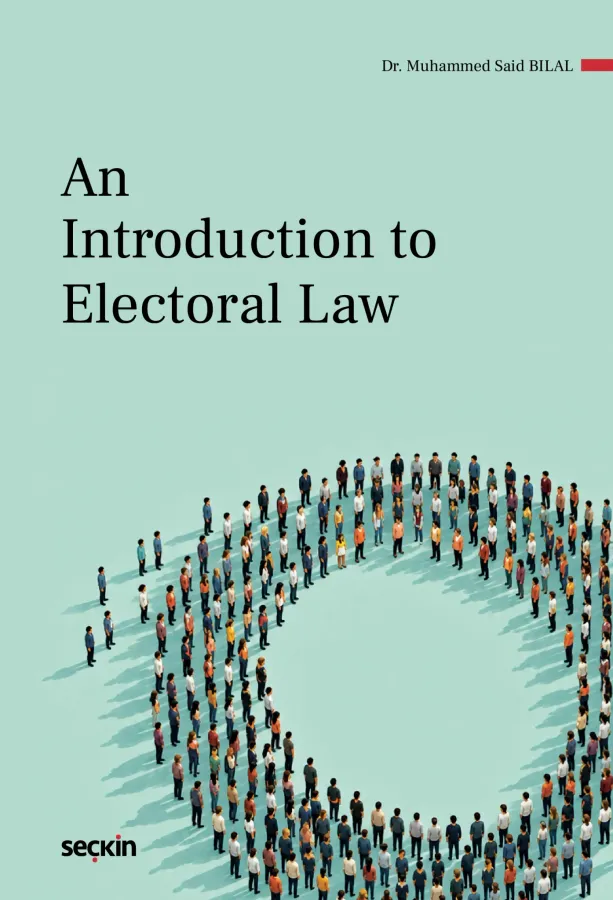
Dr. Muhammed Said Bilal
LIST OF CONTENTS
PREFACE
5
LIST OF ABBREVIATION
15
CHAPTER I
BASIC CONCEPTS OF ELECTION
A. ELECTION
17
1. Definition
17
2. Electoral System–Electoral Rules–Electoral Law
18
a. Electoral System
18
b. Electoral Rules
18
c. Electoral Law
19
B. OTHER CONCEPTS RELATED TO ELECTION
20
1. Vote
20
2. Voter / Elector
21
3. Suffrage
21
4. Ballot
22
5. Poll
22
6. Candidate
23
7. Nominate
23
8. Constituency
24
9. Constituent
25
C. DEMOCRACY AND ELECTION
25
1. Types of Democracy and Election
26
a. Direct Democracy
26
b. Representative Democracy
27
c. Multi–Party Democracy
27
2. Type of Representation
28
a. Agency Representation (Delegate Representation)
28
b. Trustee Representation (National Representation)
29
c. Microcosmic Representation
30
d. Mandate Representation (Party Mandate)
31
D. POLITICAL PARTIES
32
1. Definition of a Political Party
32
2. Ruling Party vs. Opposition Party
33
3. Party System
34
E. END OF CHAPTER ONE
34
1. Chapter Summary
34
2. Comparative Table of Core Concepts
35
3. Discussion Questions
36
4. Suggested Readings
37
CHAPTER II
POLITICAL PARTIES AND PARTY SYSTEMS
A. DEMOCRACY AND POLITICAL PARTIES
39
B. DEFINITION OF POLITICAL PARTIES
40
1. Free Association
40
2. Political Aim
41
3. Representation
41
C. FUNCTIONS OF POLITICAL PARTIES
42
1. Cooperation in the Exercise of Association and Expression
43
2. Cooperation in the Exercise of Government
43
3. Collective Responsibility for Government
44
D. THE HISTORICAL FORMATION OF POLITICAL PARTIES
44
E. THREE DIMENSIONS OF POLITICAL PARTIES
46
1. The First Dimension: Inner–party Relation
46
2. The Second Dimension: Status
47
3. The Third Dimension: Inter–party Relations
47
F. CLASSIFICATION OF POLITICAL PARTIES
48
1. OrganizationalMembership–Based Classification
48
2. Function–Based Classification
49
3. Other Classifications
50
G. PARTY SYSTEMS
53
1. Duverger’s Division
55
2. Sartori’s Division
56
H. NON–PARTISAN DEMOCRACY DEBATE
58
I. END OF CHAPTER TWO
59
1. Chapter Summary
59
2. Comparative Table of Core Concepts
60
3. Discussion Questions
62
4. Suggested Reading
62
CHAPTER III
SYSTEMS OF GOVERNMENT AND ELECTORAL LAW
A. GENERAL
63
B. KEY FEATURES THAT DEFINE A SYSTEM OF GOVERNMENT
64
1. Principle of Separation of Power
65
2. Structure of Executive Branch
66
3. Mechanisms of Checks and Balances
67
C. TYPES OF SYSTEMS OF GOVERNMENT
69
1. Parliamentary System
69
a. Soft Separation of Power
70
b. Dual Executive Structure
71
c. Checks and Balances
73
d. Parliamentary System and Electoral Law
74
2. Presidential System
76
a. Rigid Separation of Power
77
b. Single Executive Power
78
c. Checks and Balances
79
d. Presidential System and Electoral Law
81
3. Semi–Presidential System
82
a. Elected Chief of State
83
b. Competent and Executive Chief of State
83
c. Cabinet Answerable to Parliament
84
d. Semi–Presidential System and Electoral Law
85
D. END OF CHAPTER THREE
86
1. Chapter Summary
86
2. Comparative Table of Core Concepts
87
3. Discussion Questions
88
4. Suggested Readings
89
CHAPTER IV
INTERNATIONAL STANDARDS AND CRITERIA OF A DEMOCRATIC ELECTION
A. GENERAL
92
1. Elections as a Legal Process
92
2. Democratic Legitimacy and Electoral Processes
93
B. INTERNATIONAL STANDARDS
97
1. Free Elections
98
a. Will of the People
99
b. Assuring Freedom
99
c. Prerequisite Rights
99
d. Secret Ballot
100
2. Fair Elections
100
a. Universal Suffrage
101
b. Equal Suffrage
102
3. Genuine Elections
103
4. Periodic Elections
104
C. END OF CHAPTER FOUR
105
1. Chapter Summary
105
2. Comparative Table of Core Concepts
106
3. Discussion Questions
107
4. Suggested Reading
107
CHAPHER V
ELECTION ADMINISTRATION
A. GENERAL
110
1. Definition of Election Administration
110
2. Models
111
3. Principles
112
B. ISSUES RELATED TO ELECTION ADMINISTRATION
113
1. Constituency Delimitation
113
2. Registration of Electors
114
3. Nomination, Parties and Candidates
116
4. Polling, Tabulation and Reporting
117
5. Complaints, Petitions and Appeals
118
6. Respect For Fundamental Rights
120
7. Offences, Penalties and Maintenance of Public Order
121
8. Equal and Fair Media Access
122
9. Public Information and Voter Education
124
10. Observation and Verification
125
C. END OF CHAPTER FIVE
126
1. Chapter Summary
126
2. Comparative Table of Core Concepts
127
3. Discussion Questions
128
4. Suggested Reading
128
CHAPTER VI
ELECTORAL SYSTEMS
A. PLURALITY (MARORITY) SYSTEMS
130
1. First Past the Post (FPTP) / Simple Majority
131
a. Advantages
133
b. Disadvantages
134
2. The Two Round System (TRS)
136
a. Advantages
137
b. Disadvantages
138
3. Block Vote (BV)
139
a. How It Works
139
b. Advantages
140
c. Disadvantages
141
4. Party Block Vote (PBV)
142
a. Advantages
143
b. Disadvantages
143
5. The Alternative Vote (AV)
144
a. Step–by–step Counting Procedure
145
b. How Transfers Change the Majority
146
c. Exhausted Ballots and Majority Calculation
146
d. Advantages
147
e. Disadvantages
148
B. PROPORTIONAL REPRESENTATION SYSTEMS
149
1. List Proportional Representation System
150
a. Calculation Formulas — (how seats are picked from lists)
150
b. Advantages
153
c. Disadvantages
153
2. The Single Transferable Vote (STV)
154
a. The Counting in STV Proceeds in Stages
155
b. Advantages
156
c. Disadvantages
157
C. MIXED SYSTEMS
158
1. Mixed Member Proportional (MMP)
158
a. How It Works
158
b. Key Features
159
c. Advantages
159
d. Disadvantages
160
2. Parallel System (Mixed Member Majoritarian System–MMMS)
160
a. How It Works
161
b. Key features
161
c. Advantages
162
D. OTHER SYSTEMS
163
1. Single Non–Transferable Vote (SNTV)
163
a. How It Works
163
b. Advantages
164
c. Disadvantages
164
2. Limited Vote (LV)
165
a. How It Works
165
b. Advantages
166
c. Disadvantages
166
3. Borda Count
166
a. How It Works
166
b. Advantages
167
c. Disadvantages
167
D. ELECTORAL SYSTEMS RELATED ISSUES
167
1. District Magnitude
168
2. Electoral Threshold
169
3. The Features of the List
169
a. Closed Lists
170
b. Open Lists
170
c. Free lists
170
d. The Effects of the Type of List
171
E. THE END OF CHAPTER SIX
171
1. Chapter Summary
171
2. Comparative Table of Core Concepts
172
3. Discussion Questions
174
4. Suggested Readings
174
CONCLUSION
177
BIBLIOGRAPHY
181
INDEX
185
Dr. Muhammed Said Bilal
LIST OF CONTENTS
PREFACE
5
LIST OF ABBREVIATION
15
CHAPTER I
BASIC CONCEPTS OF ELECTION
A. ELECTION
17
1. Definition
17
2. Electoral System–Electoral Rules–Electoral Law
18
a. Electoral System
18
b. Electoral Rules
18
c. Electoral Law
19
B. OTHER CONCEPTS RELATED TO ELECTION
20
1. Vote
20
2. Voter / Elector
21
3. Suffrage
21
4. Ballot
22
5. Poll
22
6. Candidate
23
7. Nominate
23
8. Constituency
24
9. Constituent
25
C. DEMOCRACY AND ELECTION
25
1. Types of Democracy and Election
26
a. Direct Democracy
26
b. Representative Democracy
27
c. Multi–Party Democracy
27
2. Type of Representation
28
a. Agency Representation (Delegate Representation)
28
b. Trustee Representation (National Representation)
29
c. Microcosmic Representation
30
d. Mandate Representation (Party Mandate)
31
D. POLITICAL PARTIES
32
1. Definition of a Political Party
32
2. Ruling Party vs. Opposition Party
33
3. Party System
34
E. END OF CHAPTER ONE
34
1. Chapter Summary
34
2. Comparative Table of Core Concepts
35
3. Discussion Questions
36
4. Suggested Readings
37
CHAPTER II
POLITICAL PARTIES AND PARTY SYSTEMS
A. DEMOCRACY AND POLITICAL PARTIES
39
B. DEFINITION OF POLITICAL PARTIES
40
1. Free Association
40
2. Political Aim
41
3. Representation
41
C. FUNCTIONS OF POLITICAL PARTIES
42
1. Cooperation in the Exercise of Association and Expression
43
2. Cooperation in the Exercise of Government
43
3. Collective Responsibility for Government
44
D. THE HISTORICAL FORMATION OF POLITICAL PARTIES
44
E. THREE DIMENSIONS OF POLITICAL PARTIES
46
1. The First Dimension: Inner–party Relation
46
2. The Second Dimension: Status
47
3. The Third Dimension: Inter–party Relations
47
F. CLASSIFICATION OF POLITICAL PARTIES
48
1. OrganizationalMembership–Based Classification
48
2. Function–Based Classification
49
3. Other Classifications
50
G. PARTY SYSTEMS
53
1. Duverger’s Division
55
2. Sartori’s Division
56
H. NON–PARTISAN DEMOCRACY DEBATE
58
I. END OF CHAPTER TWO
59
1. Chapter Summary
59
2. Comparative Table of Core Concepts
60
3. Discussion Questions
62
4. Suggested Reading
62
CHAPTER III
SYSTEMS OF GOVERNMENT AND ELECTORAL LAW
A. GENERAL
63
B. KEY FEATURES THAT DEFINE A SYSTEM OF GOVERNMENT
64
1. Principle of Separation of Power
65
2. Structure of Executive Branch
66
3. Mechanisms of Checks and Balances
67
C. TYPES OF SYSTEMS OF GOVERNMENT
69
1. Parliamentary System
69
a. Soft Separation of Power
70
b. Dual Executive Structure
71
c. Checks and Balances
73
d. Parliamentary System and Electoral Law
74
2. Presidential System
76
a. Rigid Separation of Power
77
b. Single Executive Power
78
c. Checks and Balances
79
d. Presidential System and Electoral Law
81
3. Semi–Presidential System
82
a. Elected Chief of State
83
b. Competent and Executive Chief of State
83
c. Cabinet Answerable to Parliament
84
d. Semi–Presidential System and Electoral Law
85
D. END OF CHAPTER THREE
86
1. Chapter Summary
86
2. Comparative Table of Core Concepts
87
3. Discussion Questions
88
4. Suggested Readings
89
CHAPTER IV
INTERNATIONAL STANDARDS AND CRITERIA OF A DEMOCRATIC ELECTION
A. GENERAL
92
1. Elections as a Legal Process
92
2. Democratic Legitimacy and Electoral Processes
93
B. INTERNATIONAL STANDARDS
97
1. Free Elections
98
a. Will of the People
99
b. Assuring Freedom
99
c. Prerequisite Rights
99
d. Secret Ballot
100
2. Fair Elections
100
a. Universal Suffrage
101
b. Equal Suffrage
102
3. Genuine Elections
103
4. Periodic Elections
104
C. END OF CHAPTER FOUR
105
1. Chapter Summary
105
2. Comparative Table of Core Concepts
106
3. Discussion Questions
107
4. Suggested Reading
107
CHAPHER V
ELECTION ADMINISTRATION
A. GENERAL
110
1. Definition of Election Administration
110
2. Models
111
3. Principles
112
B. ISSUES RELATED TO ELECTION ADMINISTRATION
113
1. Constituency Delimitation
113
2. Registration of Electors
114
3. Nomination, Parties and Candidates
116
4. Polling, Tabulation and Reporting
117
5. Complaints, Petitions and Appeals
118
6. Respect For Fundamental Rights
120
7. Offences, Penalties and Maintenance of Public Order
121
8. Equal and Fair Media Access
122
9. Public Information and Voter Education
124
10. Observation and Verification
125
C. END OF CHAPTER FIVE
126
1. Chapter Summary
126
2. Comparative Table of Core Concepts
127
3. Discussion Questions
128
4. Suggested Reading
128
CHAPTER VI
ELECTORAL SYSTEMS
A. PLURALITY (MARORITY) SYSTEMS
130
1. First Past the Post (FPTP) / Simple Majority
131
a. Advantages
133
b. Disadvantages
134
2. The Two Round System (TRS)
136
a. Advantages
137
b. Disadvantages
138
3. Block Vote (BV)
139
a. How It Works
139
b. Advantages
140
c. Disadvantages
141
4. Party Block Vote (PBV)
142
a. Advantages
143
b. Disadvantages
143
5. The Alternative Vote (AV)
144
a. Step–by–step Counting Procedure
145
b. How Transfers Change the Majority
146
c. Exhausted Ballots and Majority Calculation
146
d. Advantages
147
e. Disadvantages
148
B. PROPORTIONAL REPRESENTATION SYSTEMS
149
1. List Proportional Representation System
150
a. Calculation Formulas — (how seats are picked from lists)
150
b. Advantages
153
c. Disadvantages
153
2. The Single Transferable Vote (STV)
154
a. The Counting in STV Proceeds in Stages
155
b. Advantages
156
c. Disadvantages
157
C. MIXED SYSTEMS
158
1. Mixed Member Proportional (MMP)
158
a. How It Works
158
b. Key Features
159
c. Advantages
159
d. Disadvantages
160
2. Parallel System (Mixed Member Majoritarian System–MMMS)
160
a. How It Works
161
b. Key features
161
c. Advantages
162
D. OTHER SYSTEMS
163
1. Single Non–Transferable Vote (SNTV)
163
a. How It Works
163
b. Advantages
164
c. Disadvantages
164
2. Limited Vote (LV)
165
a. How It Works
165
b. Advantages
166
c. Disadvantages
166
3. Borda Count
166
a. How It Works
166
b. Advantages
167
c. Disadvantages
167
D. ELECTORAL SYSTEMS RELATED ISSUES
167
1. District Magnitude
168
2. Electoral Threshold
169
3. The Features of the List
169
a. Closed Lists
170
b. Open Lists
170
c. Free lists
170
d. The Effects of the Type of List
171
E. THE END OF CHAPTER SIX
171
1. Chapter Summary
171
2. Comparative Table of Core Concepts
172
3. Discussion Questions
174
4. Suggested Readings
174
CONCLUSION
177
BIBLIOGRAPHY
181
INDEX
185
Yorum yaz
Bu kitaba henüz yorum yapılmamış.
Bonus Card ( Garanti - Teb - Denizbank - Şekerbank vb. )
| Taksit Sayısı | Taksit tutarı | Genel Toplam |
|---|---|---|
| Tek Çekim | 370,50 | 370,50 |
Maximum Card ( İş Bankası - Ziraat Bankası )
| Taksit Sayısı | Taksit tutarı | Genel Toplam |
|---|---|---|
| Tek Çekim | 370,50 | 370,50 |
Diğer Kartlar
| Taksit Sayısı | Taksit tutarı | Genel Toplam |
|---|---|---|
| Tek Çekim | 370,50 | 370,50 |
-
%5İNDİRİM1.190,00TL 1.130,50TL